
There’s something magical about cooking with spring vegetables – that first crisp bite of asparagus, the pop of fresh peas, tomatoes that actually taste like sunshine. My Spring Vegetable Pasta celebrates all these flavors in one bright, easy dish that comes together faster than you can say “al fresco dining!” I wait all winter for this moment, when my farmer’s market haul practically begs to be tossed with pasta. This recipe? It’s my happy place – simple enough for weeknights but special enough to serve guests. Just wait until you smell the garlic sizzling with those vibrant veggies… trust me, spring never tasted so good.
Why You’ll Love This Spring Vegetable Pasta
This isn’t just another pasta dish—it’s a celebration of spring on a plate! Here’s why it’s become my go-to recipe when the weather warms up:
- Weeknight superhero: Ready in under 30 minutes flat (yes, I timed it!), making it perfect for those evenings when you’re tired but still want something wholesome.
- Seasonal confetti: Every forkful bursts with the best spring has to offer—crisp asparagus, sweet peas, and those jewel-like cherry tomatoes that actually taste like tomatoes should.
- No sad, soggy veggies here: My quick sauté method keeps everything vibrant and crisp-tender, so you get that satisfying crunch in every bite.
- Sheer versatility: The base recipe is vegetarian, but it’s just waiting for your personal twist—toss in leftover chicken, shrimp, or even crispy tofu if that’s your jam.
- Leftover magic: Somehow tastes even better the next day (if it lasts that long!), making it ideal for packed lunches.
What really makes this dish special? That moment when the lemon juice hits the warm pasta—it’s like spring sunshine in every bite. Even my veggie-skeptic nephew goes back for seconds!
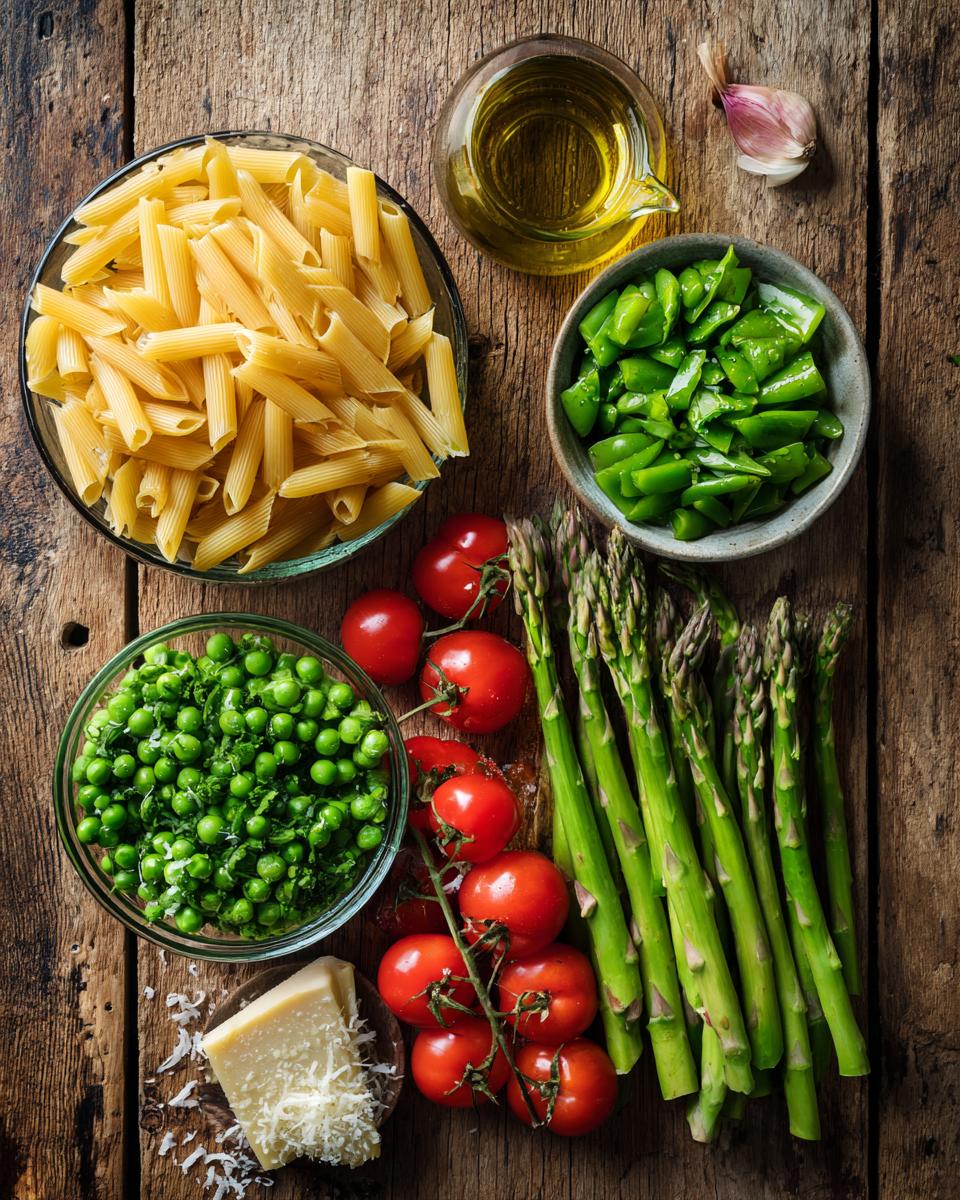
Ingredients for Spring Vegetable Pasta
Gathering the right ingredients makes all the difference with this recipe. I’ve learned through trial and error that fresh, seasonal produce and a few pantry staples create magic together. Here’s exactly what you’ll need:
- 8 oz pasta – I always use penne or fusilli because those little ridges hold onto the sauce and veggies perfectly. Whole wheat works great too if you want extra fiber.
- 2 tbsp olive oil – Good quality makes a difference here! It’s the base for sautéing all those gorgeous vegetables.
- 1 cup asparagus, chopped into 1-inch pieces – Look for bright green stalks with tight tips. Snap off the woody ends first (they’ll naturally break where they should).
- 1 cup peas – Fresh shelled peas are amazing if you can find them, but frozen work beautifully in a pinch (no need to thaw first).
- 1 cup cherry tomatoes, halved – I like using mixed colors for visual pop, but any ripe cherry tomatoes will do.
- 2 cloves garlic, minced – Fresh is best! Don’t be tempted by that jarred stuff – it makes all the difference.
- 1/4 cup grated Parmesan cheese – Please, please grate it fresh. The pre-shredded kind just doesn’t melt the same way.
- 1/4 tsp salt – I use kosher salt for cooking – it distributes flavor more evenly.
- 1/4 tsp black pepper – Freshly cracked adds the best flavor.
- 1 tbsp lemon juice – About half a medium lemon. Roll it on the counter first to get more juice out!
- 2 tbsp fresh basil, chopped – The finishing touch that makes it sing. If you must substitute, parsley works, but basil is really worth seeking out.
Pro tip: Measure everything before you start cooking (mise en place, as the fancy chefs say). This recipe moves fast once you begin, and you’ll thank yourself for being prepared!
How to Make Spring Vegetable Pasta
Now comes the fun part—bringing all those beautiful ingredients together into one glorious dish! I promise it’s easier than you think. Just follow these simple steps, and you’ll have spring on your plate in no time.
Cooking the Pasta
First things first—get your pasta going while you prep the veggies. It’s all about multitasking here!
- Bring a large pot of salted water to a rolling boil (it should taste like the sea). This is your only chance to season the pasta itself!
- Add your pasta and stir immediately to prevent sticking. Set your timer for 1 minute less than the package says for al dente perfection.
- When the timer goes off, reserve about 1/2 cup of that starchy pasta water (trust me, this is liquid gold for your sauce later). Then drain the pasta—no need to rinse!
See those little white dots in the center when you bite a piece? That’s al dente magic—it’ll finish cooking when we toss everything together.
Sautéing the Vegetables
While the pasta cooks, heat your olive oil in a large skillet over medium heat. Here’s how we layer those spring flavors:
- Add the minced garlic and sauté for just 30 seconds to 1 minute—until fragrant but not browned. Burnt garlic is bitter garlic!
- Toss in the asparagus first since it takes longest to cook. After about 2 minutes, when it turns bright green, add the peas.
- Give it another 2 minutes, then add the cherry tomatoes last—they just need to warm through and soften slightly.
You’ll know the veggies are perfect when the asparagus is crisp-tender (bendy but still with some snap) and the tomatoes just start to wrinkle at the edges.
Combining Everything
This is where the magic happens! Dump your drained pasta right into the skillet with the veggies.
- Turn off the heat and add half the Parmesan—it’ll melt into the pasta beautifully.
- Sprinkle with salt and pepper, then drizzle that glorious lemon juice over everything.
- Now grab some tongs and toss, toss, toss! If it looks dry, add a splash of that reserved pasta water until it’s perfectly coated.
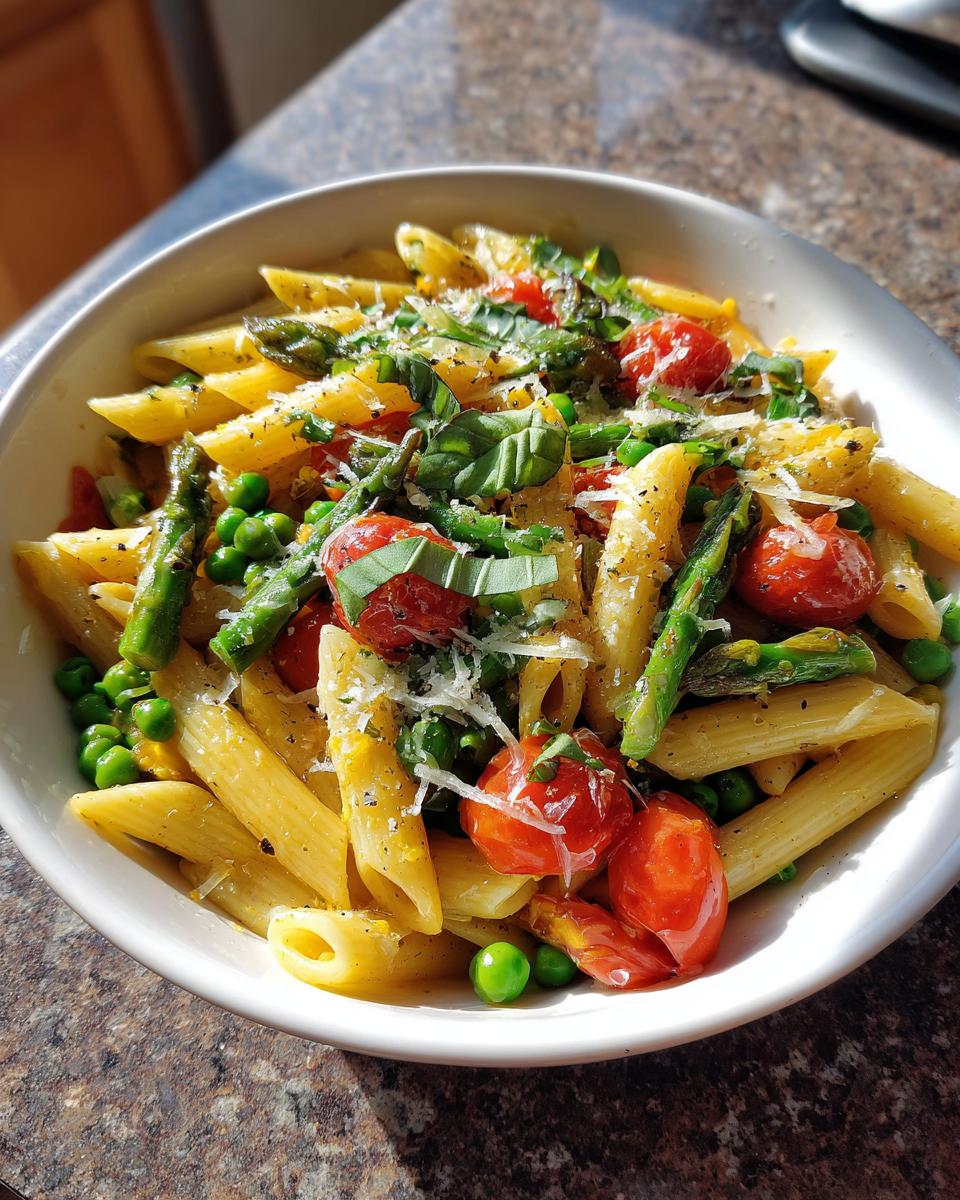
Finish with a shower of fresh basil and the remaining Parmesan. Take a big whiff—that right there? That’s the smell of springtime happiness.
Tips for Perfect Spring Vegetable Pasta
After making this recipe more times than I can count (my neighbors keep requesting it!), I’ve picked up some foolproof tricks that take it from good to “can I have the recipe?” great. Here are my hard-earned secrets:
- Pasta water is liquid gold: That starchy water you reserved? It’s the magic glue that brings everything together. Start with just a tablespoon when combining everything—you can always add more if needed.
- Taste as you go with the lemon: That 1 tablespoon measurement is just a starting point. Squeeze half first, toss, then taste. Sometimes I end up adding the whole lemon when I’m craving that extra zing!
- Keep veggies crisp-tender: They’ll continue cooking from residual heat after you turn off the burner, so pull them off when they’re just slightly underdone to your liking.
- Cheese matters: Use a microplane for the Parmesan—it melts instantly into the hot pasta. And for heaven’s sake, skip the green canister stuff!
- Timing is everything: Have everything prepped before you start cooking. This dish comes together so fast—you don’t want to be chopping basil while your garlic burns.
One last game-changer? Let the finished pasta sit for 2 minutes before serving. The flavors meld beautifully, and it’s just the right temperature—not scorching hot, but still wonderfully warm. Trust me on this!
Variations for Spring Vegetable Pasta
One of the best things about this recipe? It’s practically begging for your personal touch! Over the years, I’ve played around with countless variations—some born from necessity (“Oops, out of peas!”), others from pure culinary curiosity. Here are my favorite twists that still keep that springtime spirit alive:
- Protein power-ups:
- Toss in grilled chicken strips (my go-to for my meat-loving husband)
- Add seared shrimp during the last minute of cooking (they turn pink so fast!)
- For vegetarians, crispy pan-fried tofu cubes or cannellini beans add wonderful texture
- Veggie swaps:
- No asparagus? Zucchini ribbons make a gorgeous substitute
- Try sugar snap peas instead of regular peas for extra crunch
- In early spring when tomatoes aren’t sweet yet, roasted red peppers add lovely color
- Pasta possibilities:
- Gluten-free? Brown rice pasta works beautifully—just watch the cooking time
- For low-carb, spiralized zucchini or spaghetti squash make great noodle substitutes
- Sometimes I use lemon-pepper linguine for an extra flavor boost
- Cheese adventures:
- Swap Parmesan for pecorino romano if you want something sharper
- For creaminess, stir in a spoonful of ricotta at the end
- Vegan? Nutritional yeast gives that umami kick without dairy
The real secret? Whatever variation you choose, keep that bright lemon finish—it’s what makes all the flavors sing together. Last week I even threw in some chopped artichoke hearts I had leftover, and you know what? It was delicious! Don’t be afraid to make this recipe your own.
Serving Suggestions
Now that you’ve made this gorgeous Spring Vegetable Pasta, let’s talk about how to turn it into a complete meal that’ll have everyone at the table smiling. Over the years I’ve discovered some perfect pairings that make this dish really shine—here are my absolute favorites:
- Crusty garlic bread – I’m talking about the kind that shatters when you break it open! Perfect for scooping up any stray peas and cheese. I like to rub mine with a cut garlic clove right after toasting for that authentic Italian touch.
- A crisp white wine – My go-to is a Pinot Grigio or Sauvignon Blanc—their bright acidity complements the lemon in the pasta beautifully. For non-alcoholic, sparkling water with lemon slices gives that same refreshing contrast.
- Simple arugula salad – Just toss baby arugula with lemon juice, olive oil, and flaky salt. The peppery bite cuts through the richness of the pasta perfectly.
- Antipasto platter starter – When serving guests, I love arranging some olives, marinated artichokes, and prosciutto on a board. It makes the meal feel special without extra cooking.
- Affogato for dessert – A scoop of vanilla gelato “drowned” in hot espresso is my favorite way to end this meal. The warmth and coolness together? Absolute bliss.
Pro tip: Serve the pasta in a big colorful bowl family-style—it looks so inviting that way! I always put the extra Parmesan and lemon wedges on the table too because everyone seems to want just “a little more.” And don’t forget the good napkins—this is hands-on, slurpy, joyful eating at its best!
Storing and Reheating Spring Vegetable Pasta
Let’s be honest—leftovers rarely happen with this pasta in my house (my kids practically lick their plates clean!). But when they do, here’s how I keep that springtime freshness alive for round two:
- The fridge is your friend: Store in an airtight container for up to 2 days—any longer and the veggies start to get sad. I swear by glass containers because they don’t absorb odors.
- Revival magic: When reheating, splash in a tablespoon of water or broth before microwaving in 30-second bursts, stirring between each. The steam brings it back to life without drying out!
- Stovetop savvy: My preferred method! Warm it gently in a skillet over low heat with a drizzle of olive oil. Toss in a handful of fresh basil at the end to wake up the flavors.
- The cheese rule: Hold off adding extra Parmesan until after reheating—it gets grainy if melted twice. A fresh grating makes all the difference!
- Veggie refresh: If the peas look dull, stir in a handful of fresh ones right before serving—their pop of color and crunch fools everyone into thinking it’s brand new.
Funny story—last week I discovered this pasta tastes amazing cold straight from the fridge at midnight (not that I’d know from personal experience…ahem). The lemon flavor actually intensifies overnight! Just saying—no judgment if you skip the reheating altogether.
Nutritional Information
Now, I’m no dietitian, but I know many folks like having nutritional info—so here’s the scoop on what’s in each delicious serving of this Spring Vegetable Pasta. Just remember, these are estimates based on my exact ingredient list (your Parmesan might be saltier, your tomatoes sweeter, etc.).
- Serving Size: About 1 generous cup (we both know you’ll go back for seconds!)
- Calories: 320 – Light enough for a weeknight but satisfying
- Carbs: 50g – Mostly from the wholesome pasta and veggies
- Fiber: 6g – Thanks to all those beautiful spring vegetables!
- Protein: 12g – The Parmesan adds a nice protein punch
- Fat: 8g – Mostly heart-healthy olive oil goodness
- Sugar: 5g – All natural from the veggies, no added sugars
A quick disclaimer from my kitchen to yours: These numbers can wiggle a bit depending on your exact ingredients. Used more Parmesan? (I don’t blame you!) The protein and fat will tick up. Opted for whole wheat pasta? That fiber count gets even better. At the end of the day, what matters most is that you’re eating real food packed with spring’s freshest flavors—and enjoying every bite!
Frequently Asked Questions
Over the years of making this Spring Vegetable Pasta for everyone from picky toddlers to fancy dinner parties, I’ve heard all the questions. Here are the ones that keep popping up – along with my tried-and-true answers!
Can I use frozen vegetables instead of fresh?
Absolutely! Frozen peas work beautifully (no need to thaw – just toss them in frozen). For the asparagus, I’d still recommend fresh, but in a pinch, frozen cut asparagus will do (just add it a minute earlier). The texture changes slightly, but the flavor’s still there!
How can I make this vegan?
Easy peasy! Skip the Parmesan and use either nutritional yeast for that cheesy flavor or a vegan parm substitute. The real star here is those fresh veggies and lemon anyway – I swear even my dairy-loving husband didn’t notice when I made the vegan version last Meatless Monday!
My pasta always turns out dry – what am I doing wrong?
Two things: 1) Make sure you’re reserving that starchy pasta water (I keep a mug right by the colander so I don’t forget), and 2) Don’t skip the olive oil finish when tossing everything together. The combo creates the perfect silky coating. If it still seems dry, add another tablespoon of water or oil until it glistens.
Can I prep any components ahead?
You bet! I often chop the veggies in the morning and store them in separate containers. The asparagus might brown slightly – just toss it with a few drops of lemon juice. Cooked pasta keeps well too – toss with a teaspoon of oil to prevent sticking. When ready, everything comes together in 5 minutes flat!
What if my family won’t eat certain vegetables?
Been there! The beauty of this recipe is its flexibility. Not into peas? Try diced zucchini. Tomatoes too acidic? Roasted red peppers add sweetness. The key is keeping the same volume of veggies – swap freely within the same color family (green for green, etc.) to maintain that beautiful spring palette.
Spring Vegetable Pasta
A light and fresh pasta dish packed with seasonal spring vegetables. Perfect for a quick and healthy meal.
- Prep Time: 10 mins
- Cook Time: 15 mins
- Total Time: 25 mins
- Yield: 4 servings 1x
- Category: Main Course
- Method: Stovetop
- Cuisine: Italian
- Diet: Vegetarian
Ingredients
- 8 oz pasta (penne or fusilli)
- 2 tbsp olive oil
- 1 cup asparagus, chopped
- 1 cup peas (fresh or frozen)
- 1 cup cherry tomatoes, halved
- 2 cloves garlic, minced
- 1/4 cup grated Parmesan cheese
- 1/4 tsp salt
- 1/4 tsp black pepper
- 1 tbsp lemon juice
- 2 tbsp fresh basil, chopped
Instructions
- Cook pasta according to package instructions. Drain and set aside.
- Heat olive oil in a pan over medium heat.
- Add garlic and sauté for 1 minute.
- Add asparagus, peas, and cherry tomatoes. Cook for 5 minutes.
- Toss in the cooked pasta, Parmesan cheese, salt, and pepper.
- Drizzle with lemon juice and garnish with fresh basil.
- Serve warm.
Notes
- Use whole wheat pasta for extra fiber.
- Add grilled chicken or shrimp for protein.
- Store leftovers in an airtight container for up to 2 days.
Nutrition
- Serving Size: 1 cup
- Calories: 320
- Sugar: 5g
- Sodium: 250mg
- Fat: 8g
- Saturated Fat: 2g
- Unsaturated Fat: 5g
- Trans Fat: 0g
- Carbohydrates: 50g
- Fiber: 6g
- Protein: 12g
- Cholesterol: 5mg