
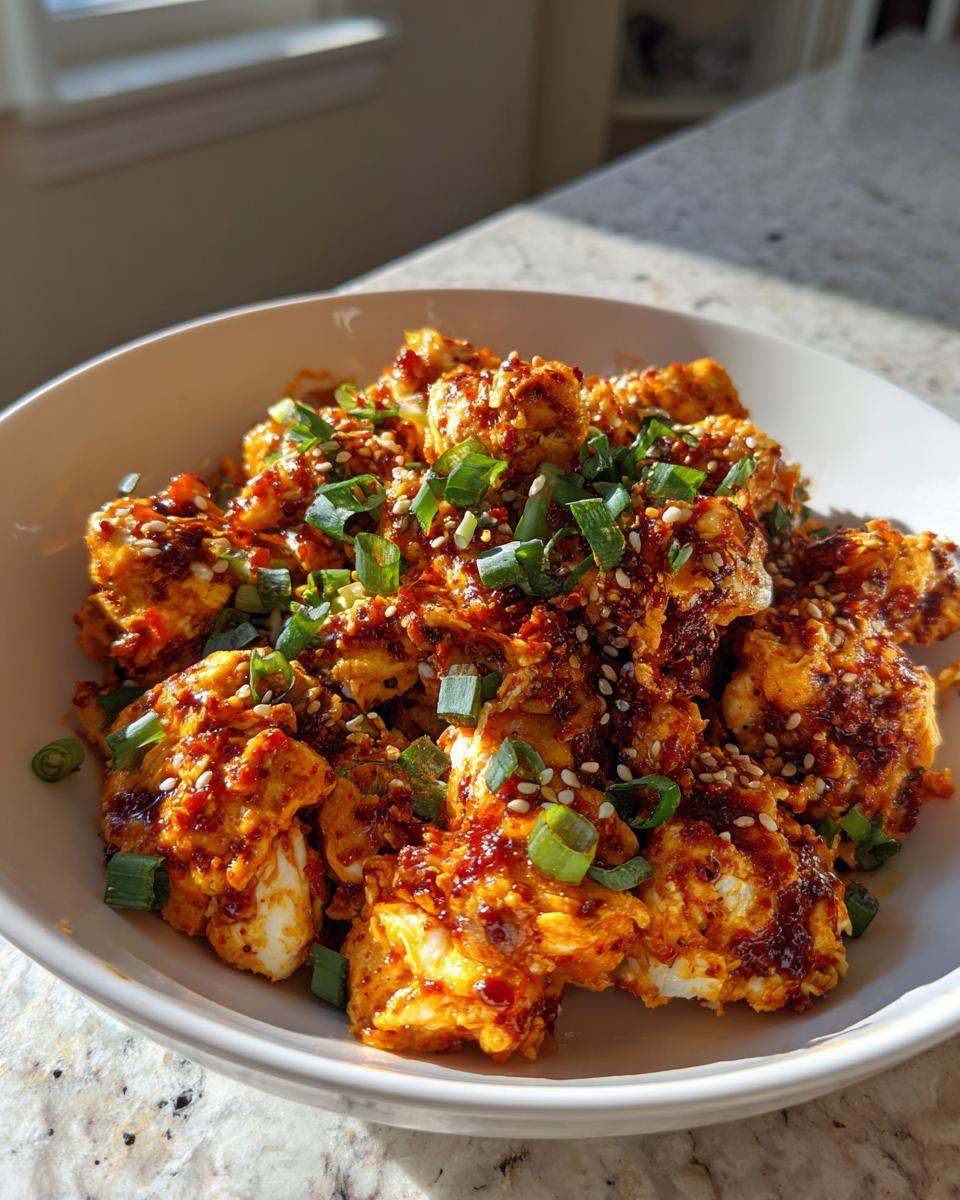
I’ll never forget the first time I tried Spicy Gochujang Eggs. It was one of those mornings when I was craving something bold and different, and I stumbled across a jar of gochujang in my fridge. I thought, “Why not mix it with eggs?” Let me tell you, it was a game-changer! The spicy, savory paste transformed my usual scrambled eggs into a flavor explosion. The best part? It takes just 10 minutes from start to finish. Perfect for those rushed mornings when you still want something special. Trust me, once you try these eggs, they’ll become your go-to breakfast in no time.
Why You’ll Love These Spicy Gochujang Eggs
These eggs aren’t just another breakfast – they’re a flavor-packed experience you’ll crave. Here’s why:
- Lightning-fast: Ready in just 10 minutes, perfect for sleepy mornings
- Bold flavors: That addictive sweet-spicy kick from gochujang makes ordinary eggs seem boring
- Your heat level: Easy to adjust spice by adding more or less paste
- Morning hero: Equally great slapped on toast or served over steaming rice
- Pantry-friendly: Uses ingredients you probably already have (minus maybe the green onions)
I make these at least twice a week – they’re that good!
Ingredients for Spicy Gochujang Eggs
Here’s everything you’ll need to make these flavor-packed eggs. I always measure carefully – too much gochujang can be overwhelming!
- 2 large eggs: Fresh ones make all the difference in texture
- 1 tbsp gochujang paste: The star ingredient – I use the red tubed kind
- 1 tsp soy sauce: For that perfect salty-sweet balance
- 1 tsp sesame oil: Adds nutty aroma – don’t skip this!
- 1 green onion: Thinly sliced for fresh crunch
- 1 tsp vegetable oil: For cooking – neutral flavor works best
See? Just six simple ingredients for eggs that taste like they came from a Korean diner!
How to Make Spicy Gochujang Eggs
Making these eggs is so simple, but there are a few tricks I’ve learned to get them just right. Follow these steps, and you’ll have restaurant-quality spicy eggs in no time!
Step 1: Prep the Egg Mixture
First, crack those eggs into a bowl – I like using a wide one for easier whisking. Now, here’s the key: whisk them really well until they’re completely smooth with no streaks. This makes all the difference in texture! Then add your gochujang and soy sauce. At first, it’ll look lumpy, but keep whisking until you get this gorgeous, uniform orange-red color. The mixture should be slightly thicker than plain scrambled eggs – that’s how you know the paste is properly incorporated.
Step 2: Cook to Perfection
Heat your pan over medium heat – not too hot, or the eggs will brown too fast. Add the oil, then pour in your egg mixture. Now, here’s my favorite part: use a spatula to gently push the eggs from the edges toward the center as they set. Keep doing this for about 2-3 minutes until you get soft, fluffy curds. Don’t overcook them! They should still look slightly wet when you take them off the heat – they’ll keep cooking from residual heat. Finally, drizzle with that fragrant sesame oil and sprinkle with green onions. The aroma alone will make your mouth water!
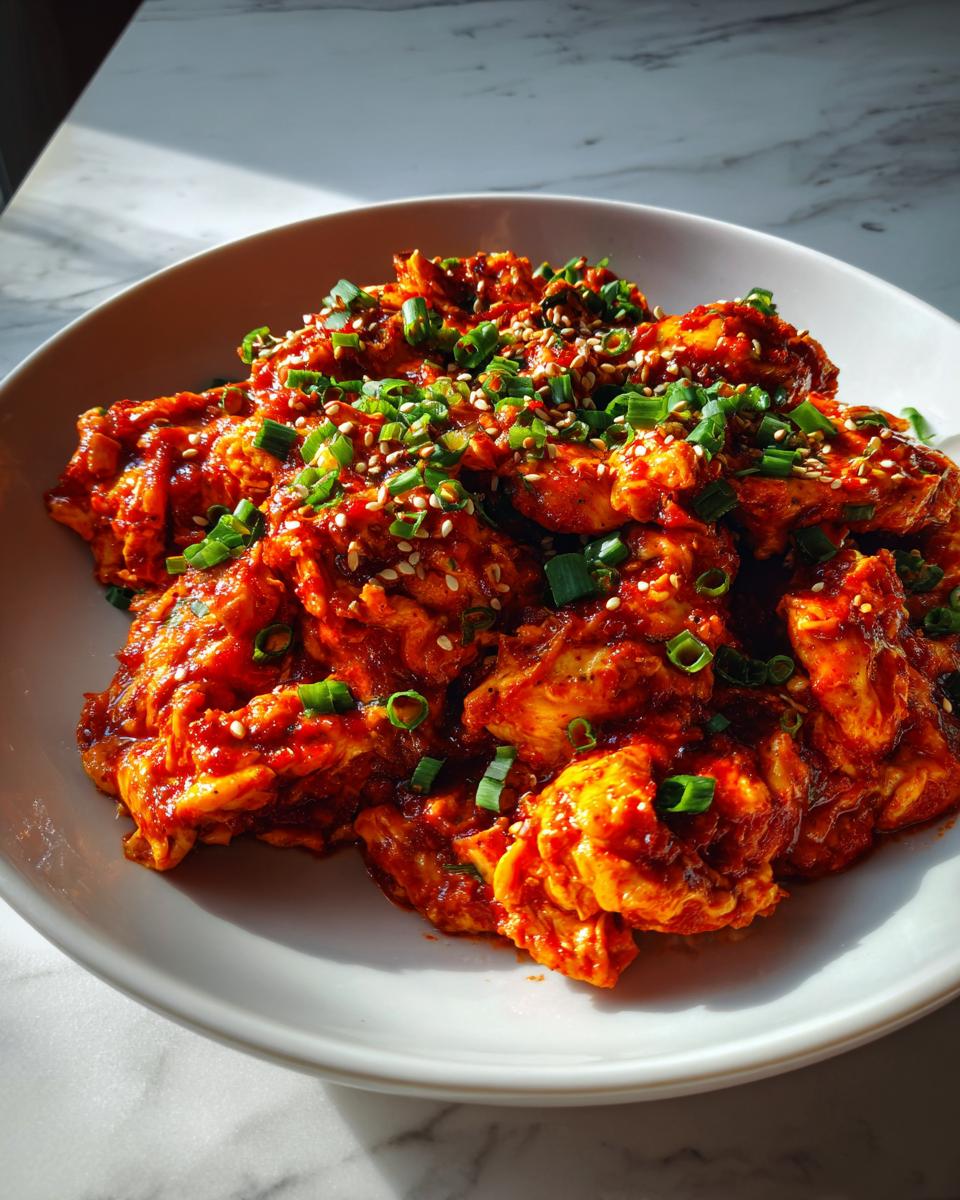
Pro tip: If your eggs seem to be cooking too fast, just pull the pan off the heat for 10 seconds to control the temperature. And remember – they firm up quickly, so err on the side of underdone rather than overdone!
Expert Tips for the Best Spicy Gochujang Eggs
After making these eggs countless times (seriously, I might have a problem), I’ve picked up some foolproof tricks to take them from good to mind-blowing.
- Spice control is key: New to gochujang? Start with ½ tbsp and taste as you go. You can always add more, but you can’t take it out once it’s mixed in!
- Egg freshness matters: The fresher your eggs, the creamier your scramble. Test yours by placing them in water – fresh ones sink flat on their sides.
- Low and slow wins: Medium heat is your friend here. High heat makes rubbery eggs before the flavors can develop properly.
- The ‘still wet’ rule: Pull the eggs off the heat when they’re 90% done. They’ll finish cooking on the plate and stay beautifully tender.
- Sesame oil timing: Always add it after cooking – heating it too much destroys that lovely nutty aroma.
My biggest aha moment? Letting the cooked eggs rest for a minute before eating lets the flavors mingle perfectly. Try it – you’ll taste the difference!
Serving Suggestions for Spicy Gochujang Eggs
Oh, the possibilities with these eggs! My absolute favorite way is piled high on steaming white rice – the heat mellows just enough against the fluffy grains. For busy mornings, I’ll slap them between buttered toast (messy but so worth it). Feeling fancy? Add a side of kimchi for that perfect tangy crunch. Don’t forget the finishing touches – a sprinkle of toasted sesame seeds or extra green onions takes them to the next level. Honestly, I’ve even eaten them straight from the pan (no judgment here).
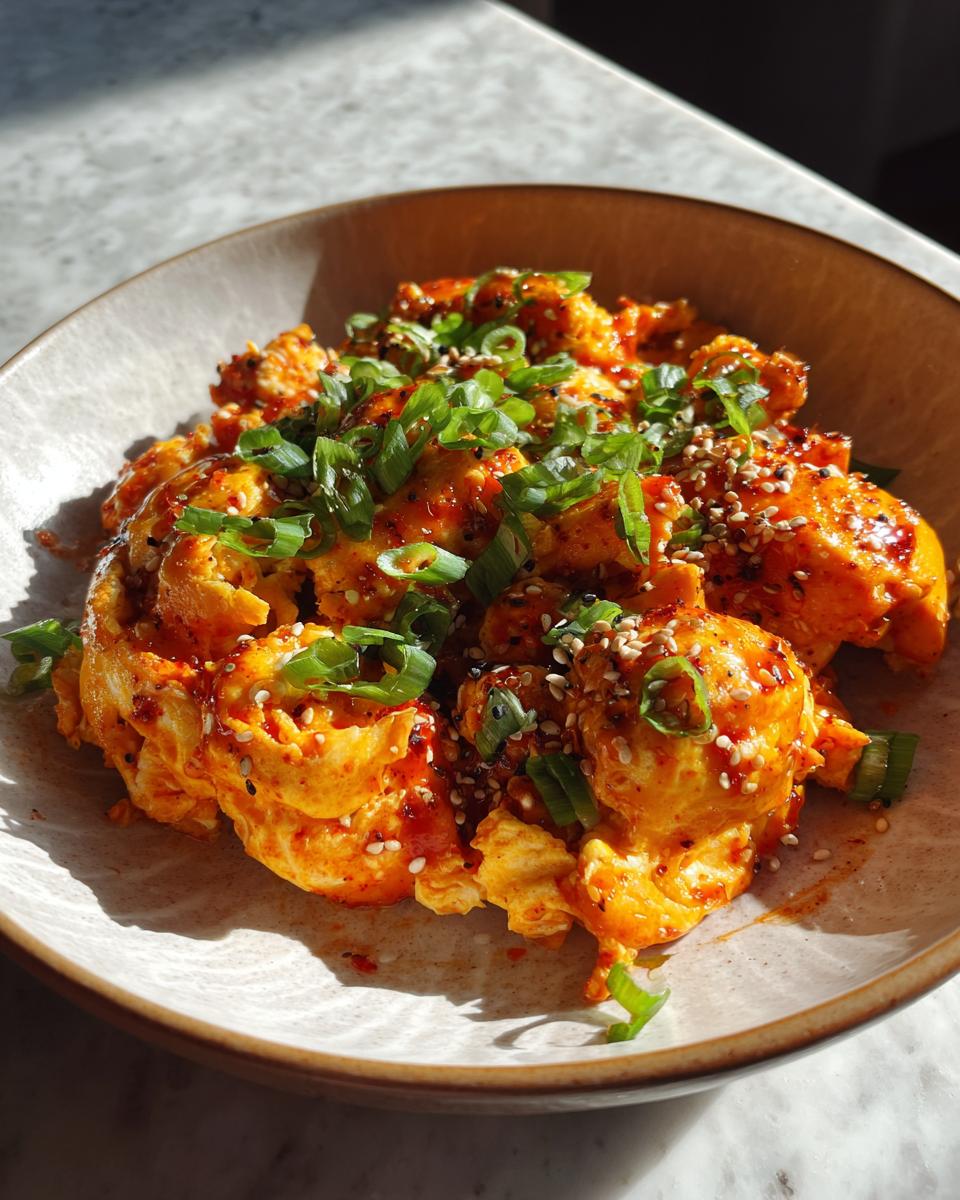
Ingredient Substitutions & Notes
No gochujang? A mix of ½ tbsp chili paste + ½ tsp honey comes close (but isn’t quite the same). For gluten-free, use tamari instead of soy sauce. Vegetarians – you’re already golden! Out of sesame oil? Skip it, but you’ll miss that nutty finish. Fresh green onions make all the difference, but in a pinch, ¼ tsp onion powder works.
Storage & Reheating
These eggs keep surprisingly well! Store leftovers in an airtight container in the fridge for up to 2 days. When reheating, go low and slow – 30 seconds in the microwave at 50% power prevents rubbery eggs. Add a tiny splash of water to keep them moist. Honestly though? They’re best eaten fresh – the flavors pop so much more!
Spicy Gochujang Eggs FAQs
Got questions about these fiery little wonders? I’ve answered all the common ones I get from friends who try my Spicy Gochujang Eggs recipe!
Can I make this less spicy?
Absolutely! Start with just ½ tablespoon gochujang (that’s half the usual amount). You can always stir in more after tasting. For super mild eggs, use 1 teaspoon and add a pinch of sugar to balance the flavor.
Is gochujang gluten-free?
Most standard gochujang contains wheat, so check labels carefully. Look for brands specifically marked gluten-free, or make your own blend with rice flour instead. When in doubt, tamari (gluten-free soy sauce) paired with chili paste works in a pinch!
Why are my eggs turning out dry?
Two likely culprits: overcooking or old eggs. Pull them off the heat while still slightly wet-looking – they’ll firm up perfectly. And always use the freshest eggs you can find; older ones lose moisture.
Can I make these ahead for meal prep?
They’re best fresh, but you can whisk the egg-gochujang mixture the night before and store it covered in the fridge. Cook time might increase by 30 seconds since you’re starting with cold ingredients.
What if I don’t have sesame oil?
The dish will still taste great – just slightly less complex. A tiny drizzle of olive oil or even a pat of butter at the end adds richness. But trust me, sesame oil is worth keeping in your pantry!
Nutritional Information
Nutrition facts are estimates and will vary based on ingredients used. Per serving: 220 calories, 12g protein, 15g fat (3g saturated), 8g carbs (1g fiber), 2g sugar. The eggs pack protein while gochujang adds minimal carbs – a satisfying balance!
Did You Make This Recipe?
If you tried these Spicy Gochujang Eggs, I’d love to hear how they turned out! Drop a comment below and let me know if you nailed the spice level or if you added your own twist. Did you serve them over rice, or maybe on toast? Snap a photo and tag me—I’m always excited to see your creations. And if you’re as obsessed with these eggs as I am, share the recipe with your friends. Trust me, they’ll thank you later! You can find more delicious recipes on BBC Good Food ME.
Print10-Minute Spicy Gochujang Eggs: Bold Flavor Explosion
A quick and flavorful dish featuring eggs cooked with spicy gochujang paste.
- Prep Time: 5 mins
- Cook Time: 5 mins
- Total Time: 10 mins
- Yield: 1 serving 1x
- Category: Breakfast
- Method: Stir-fry
- Cuisine: Korean
- Diet: Vegetarian
Ingredients
- 2 large eggs
- 1 tbsp gochujang paste
- 1 tsp soy sauce
- 1 tsp sesame oil
- 1 green onion, chopped
- 1 tsp vegetable oil
Instructions
- Heat vegetable oil in a pan over medium heat.
- Whisk eggs in a bowl.
- Add gochujang paste and soy sauce to the eggs. Mix well.
- Pour the egg mixture into the pan.
- Stir gently until eggs are cooked.
- Drizzle with sesame oil and garnish with green onions.
Notes
- Adjust gochujang amount for desired spice level.
- Serve with rice or toast.
Nutrition
- Serving Size: 1 serving
- Calories: 220
- Sugar: 2g
- Sodium: 450mg
- Fat: 15g
- Saturated Fat: 3g
- Unsaturated Fat: 10g
- Trans Fat: 0g
- Carbohydrates: 8g
- Fiber: 1g
- Protein: 12g
- Cholesterol: 370mg